Flags outdoors
What sun and wind do to nylon flags
Sewn nylon stands on a pin in the sun and rain, turns in the breeze, and shows where the hole sits from across the yard. This note covers how wind snaps the fly end, how direct sunlight alters color, how sleeve and grommet mounts differ in the wind, and how to put a damp flag away without ruining the cloth.
The fly end snaps against itself
Rain wets the cloth, but wind does the damage. When a gust hits the flag, the trailing edge whips back and forth, slapping fabric against fabric until the weave loosens. That fly end takes the brunt of every breeze. We sew the outer hem with two parallel rows of stitching so the edge holds together longer when the snapping starts. A single row of thread pops early under that whip action. Once thread breaks at the corner, the loose strands catch more wind and fraying spreads inward along the edge.
Direct sunlight alters color over time
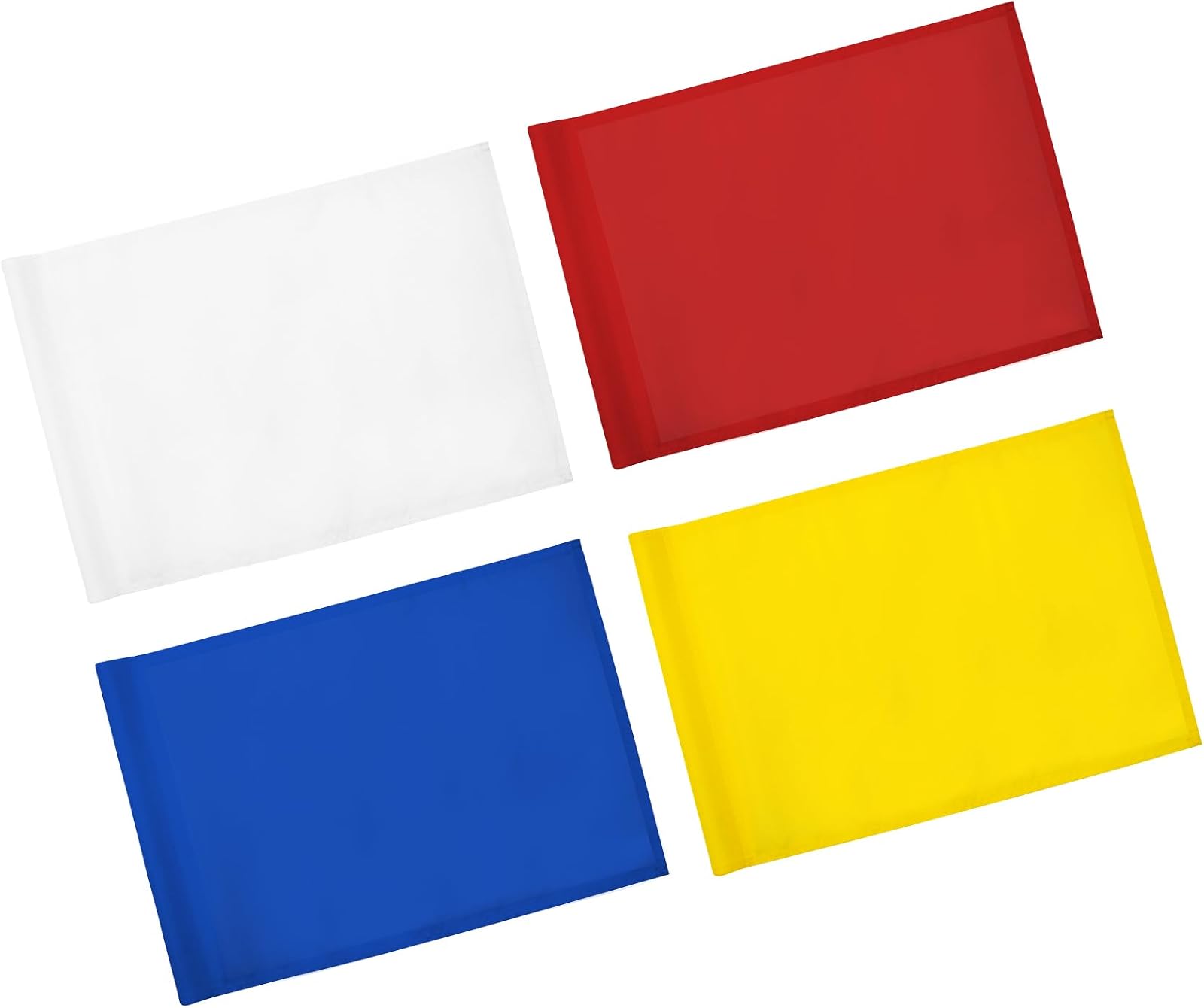
Nylon sits under full sun all day, and strong light changes pigment. Red, yellow, blue, and dark green flags will shift in tone as the months pass. We do not claim any cloth is immune to sunlight. If you leave a pin standing through the heat of summer, the face toward the south will fade faster than the side turned away. Taking the flag off the pole when no one putts for a stretch of weeks keeps the color close to how it arrived. Storing the cloth out of direct light is the only step that actually slows the shift.
How sleeve mounts handle the breeze
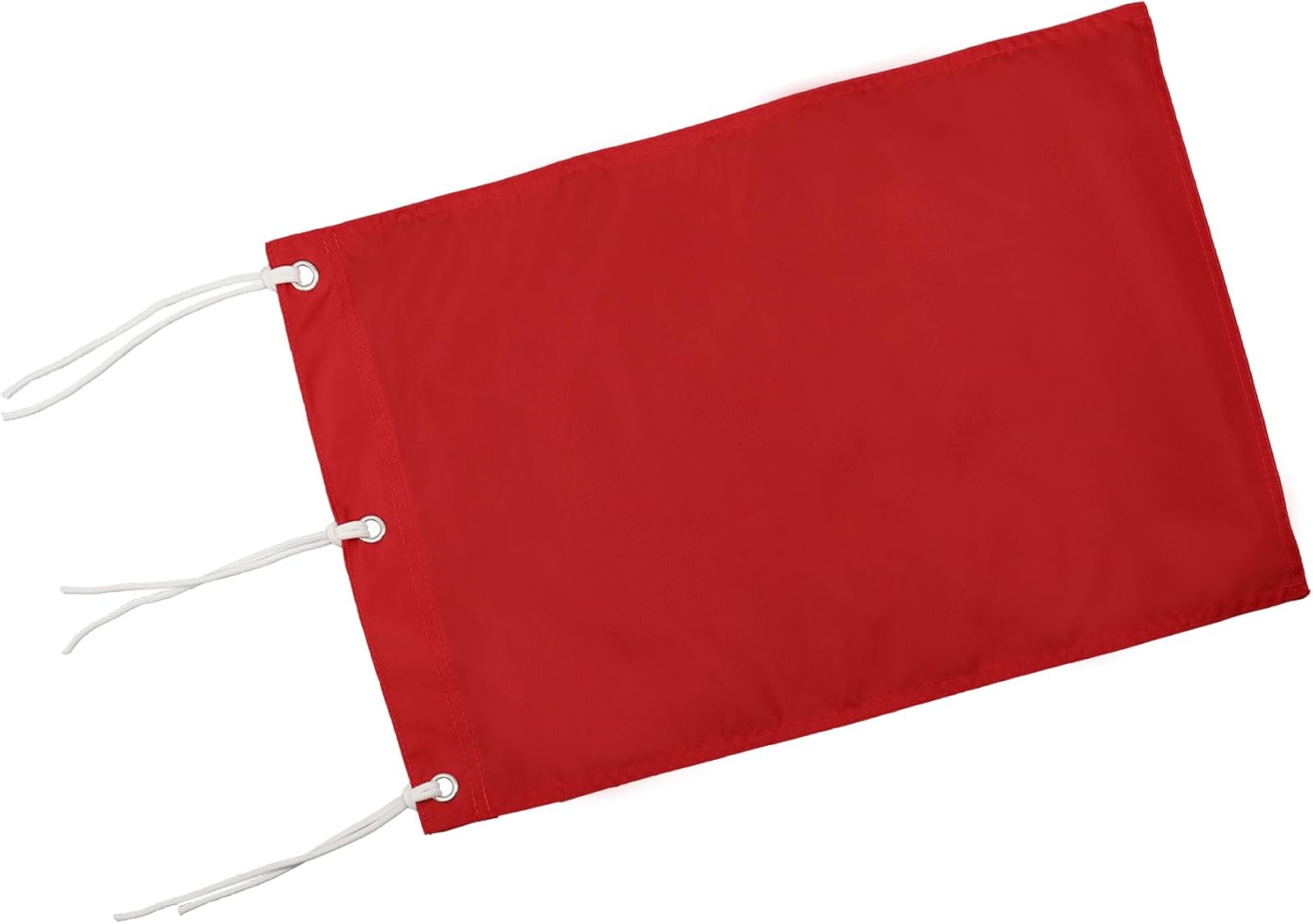
The way a flag hangs from the pin alters how it meets moving air. A sewn tube sleeve drops over the top of the pole and spins around the shaft as the breeze shifts direction. Because the whole sleeve turns, the leading edge faces straight into the wind and allows air to spill off both sides evenly. A flag hung from two brass grommets stays clipped at fixed points. Wind pulls sideways on those grommets, stretching the corners and holding the cloth at an angle that catches more force across the middle.
Drying wet cloth before storage
A wet flag left on the pole outside dries out on its own as soon as the air clears. Trouble starts when you pull the pin after a storm and pack a soggy flag straight into a shed or a box. Damp nylon folded in the dark develops dark mildew spots and a sour smell that stays in the weave. If you bring your flags indoors for winter or between matches, spread the cloth flat on a bench or hang it until dry to the touch. Once dry, nylon can sit folded in a drawer until the next round without damage.
Patterns visible on both faces
Because a sleeve flag spins around the pole, players see alternate sides of the cloth as they move around the putting surface. Plain colors and simple checkered grids look identical from either direction. When we print numbers or the stars and stripes on nylon, we print both faces so the design reads correctly no matter which way the wind blows the cloth. A design printed on only one side shows a pale reverse image when the breeze turns the flag away from where the golfer stands on the green.
Worth remembering
- Wind snaps the fly end of a flag, which is why the trailing hem is double stitched.
- Direct sunlight gradually changes the color of nylon fabric left standing outdoors.
- A sewn tube sleeve turns on the pole so the flag meets the wind head on.
- Brass grommets clip to fixed points on a pole and hold the corners firm.
- Flags with numbers or the stars and stripes are printed on both faces.
Keeping cloth in good shape
Cloth standing in the yard takes weather every hour of the day. Double stitching on the hem keeps the trailing edge intact longer, and a turning sleeve reduces pull on the corners. When the green sits idle for weeks, sliding the flags off the poles and keeping them in a dry place out of the sun preserves the weave and the print.