Cutting the hole
Holding an edge on a turf hole
A spade tears the turf, leaves loose roots behind, and the rim goes soft within days. We cut the hole with a cylindrical tool, drop a liner to hold the wall, and keep the soil plug whole for later. Here is how that work goes in ordinary lawn dirt.
Taking out a clean plug
A spade leaves an oval hole with ragged shoulders. The grass at the lip dries out because the roots were sheared sideways, and the first shoe that steps near the rim caves the soil into the cup floor. A cylindrical cutter presses straight down through the root zone and lifts a solid core in one motion. That plug has the grass crown intact on top and firm subsoil below. Drop it into a plastic pot in the shade and wet it occasionally. When you move the hole to spread foot traffic, that core drops straight back into the old void, sits level with the surrounding turf, and takes root again without leaving a dead brown ring across the putting line.
What holds the rim up
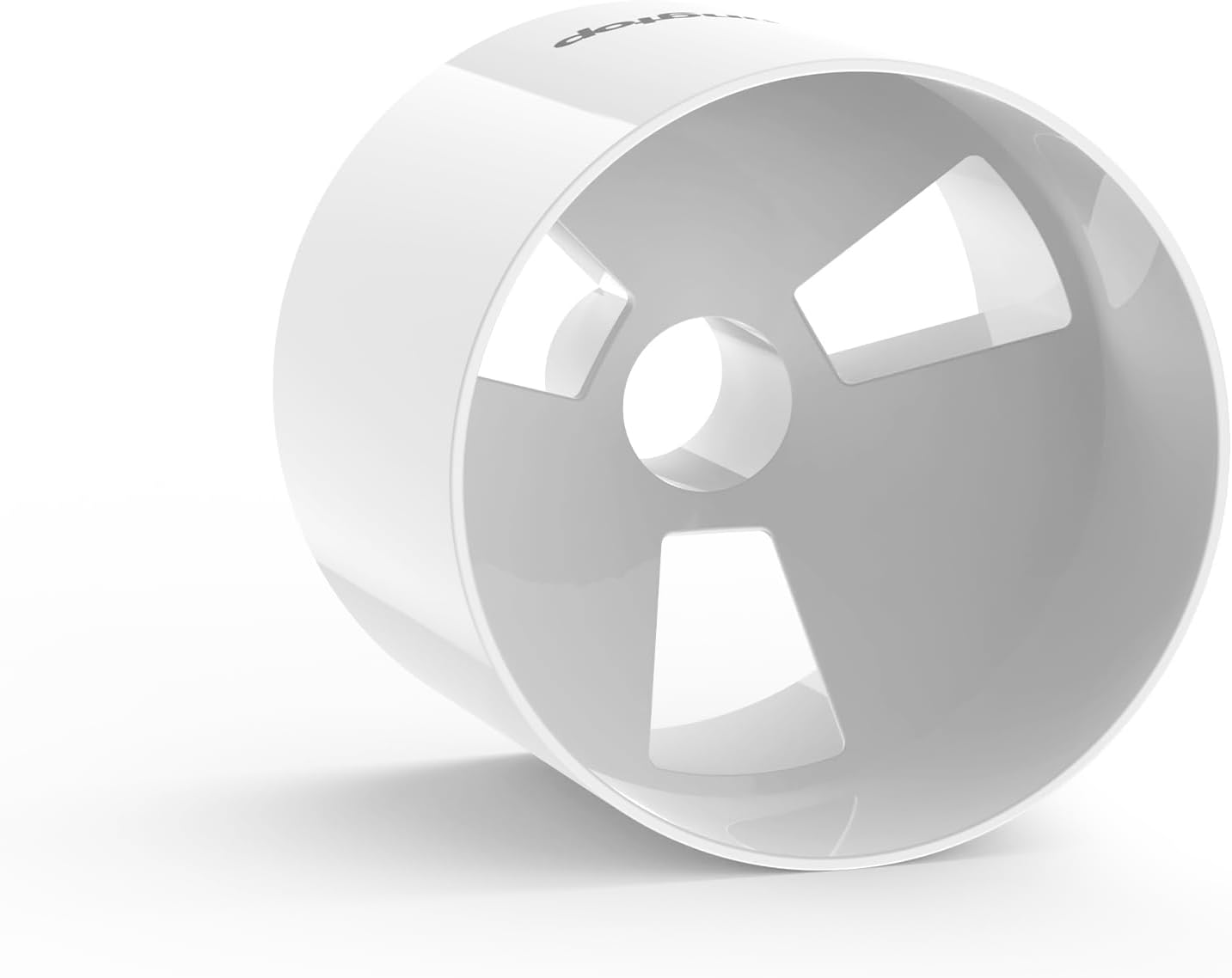
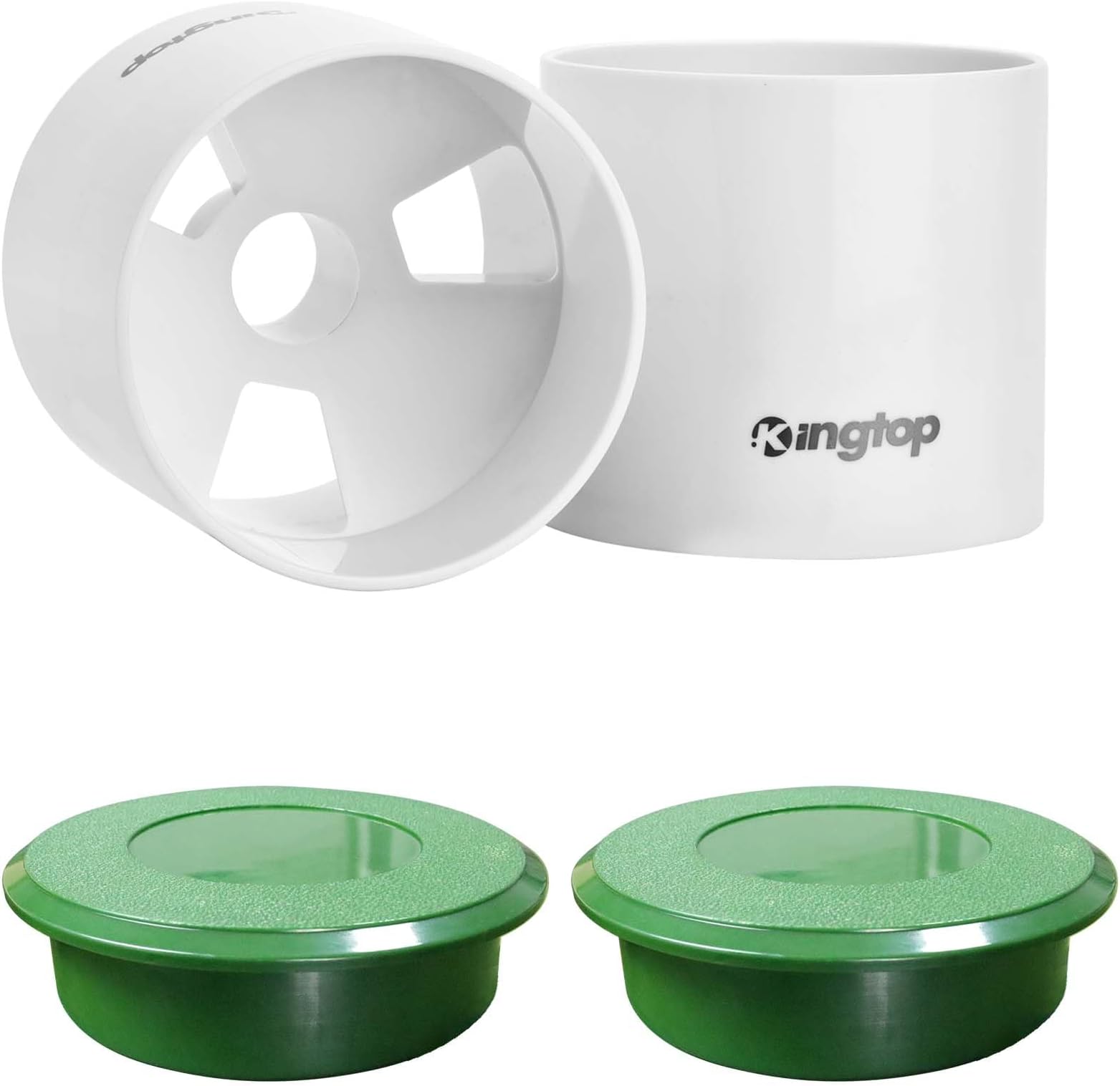
Bare dirt cannot support the weight of a putter head or a shoe edge repeatedly pressing against it. The liner inside the hole is what gives the lip its structure. Without it, the dirt wall slumps inward each time a ball drops in or a hand reaches down to clear the floor. A regulation cup provides that rigid inner face. The plastic wall takes the lateral pressure from the surrounding lawn so the turf edge above stays crisp. Seat the top rim of the liner slightly below the level of the soil surface. Setting it flush causes the mower blade to strike the rim, which chips the plastic and dulls the reel on the next pass across the green.
Choosing the depth of the cup
A shallow cup and a deep cup share the exact same width across the top. The ball drops into both without any difference in entry width, because regulation diameter does not change. Depth is entirely about what sits beneath your sod. Deep models give the pin base a taller socket to stand in, which keeps tall poles steady in heavy gusts. Shallow models are for lawns where hardpan clay, tree roots, buried irrigation pipe, or bedrock sits right under the topsoil. If your soil gives you only thin clearance before hitting stone, the shallow liner lets you set a regulation target without having to trench through rock.
Water on the cup floor
A solid cup turns into a bucket during a rain shower. Silt washes down the pole, collects at the base, and creates a thick mud that jams the pin socket. We put drain holes through the floor of the cup so standing water seeps out into the subgrade instead of pooling around the base of the pole. When cutting the ground, take the tool a little deeper than the liner itself and drop a handful of coarse gravel or sharp sand into the bottom before seating the plastic. That pocket gives the drainage water an easy exit route, keeps the pin base clean of grit, and stops the ball from soaking up dirty moisture at the bottom of the cup.
Covers and putting mirrors
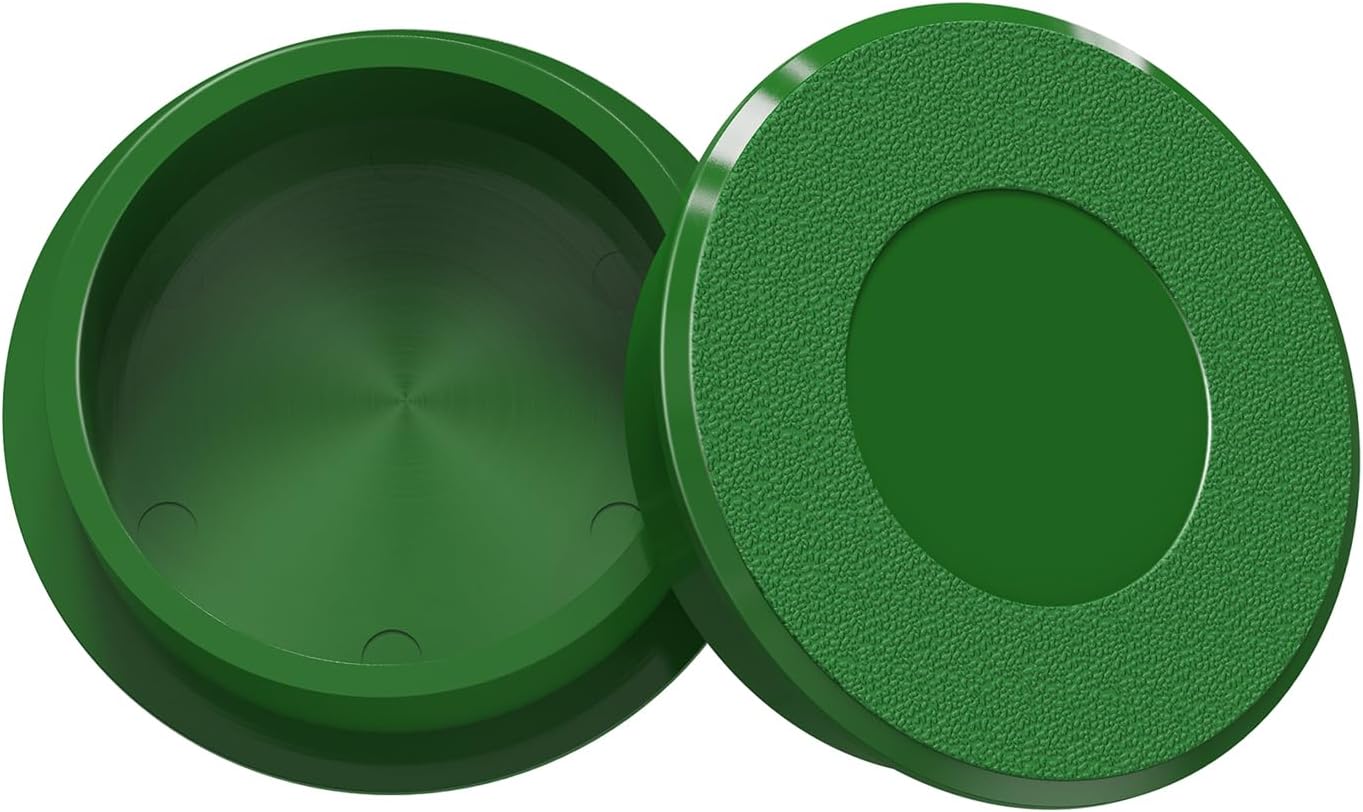
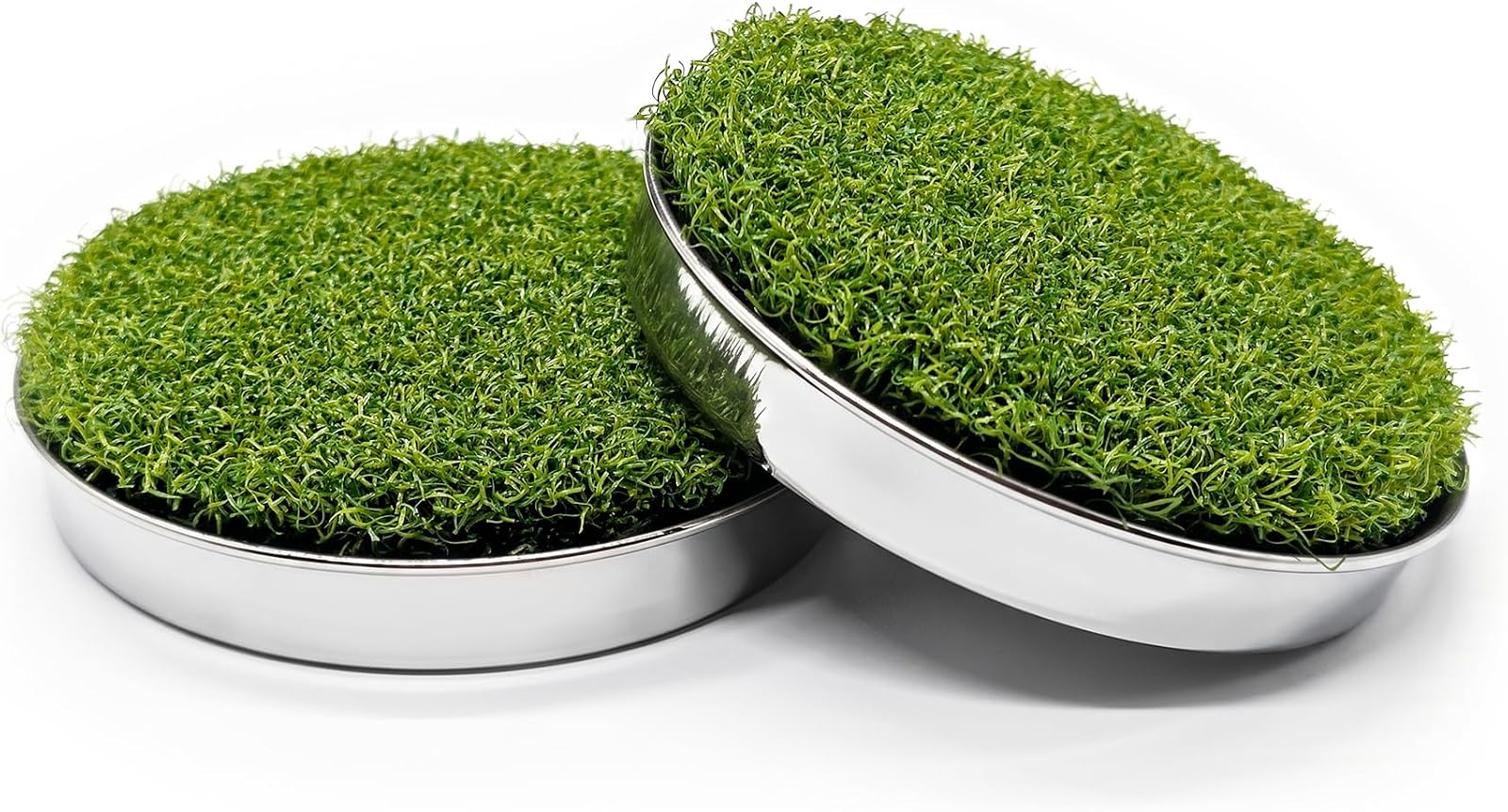
Leaving an open hole in a lawn turns it into an ankle trap between games and forces you to steer the mower around it. Flat caps close the void. Steel covers topped with living turf drop directly into the rim and sit level with the green, letting mower blades pass overhead without catching. You mow the green straight across instead of dodging open targets. On this same shelf, putting mirrors appear alongside the cups. They are flat alignment plates laid on top of the turf to check eye position and shoulder line during practice stroke work, not hardware that gets buried in the lawn.
Worth remembering
- Shallow and deep cups share the identical regulation width across the top rim.
- Drain holes in the cup floor allow rainwater to soak away into the subgrade below.
- A cylindrical cutter extracts a single soil plug that can refill the hole later.
- Turf topped steel covers sit flush with the surface so mowers pass straight over them.
- Putting mirrors are alignment aids for the stroke rather than ground hardware.
Keeping the lawn playable
Good lawn targets depend on a crisp edge that does not crumble when the ball rolls in. Cut the core clean, drop the liner below the blade height of the mower, and keep the drain floor clear. The hardware will do the rest of the holding work.