Picking a pole
Matching a flagstick to your lawn
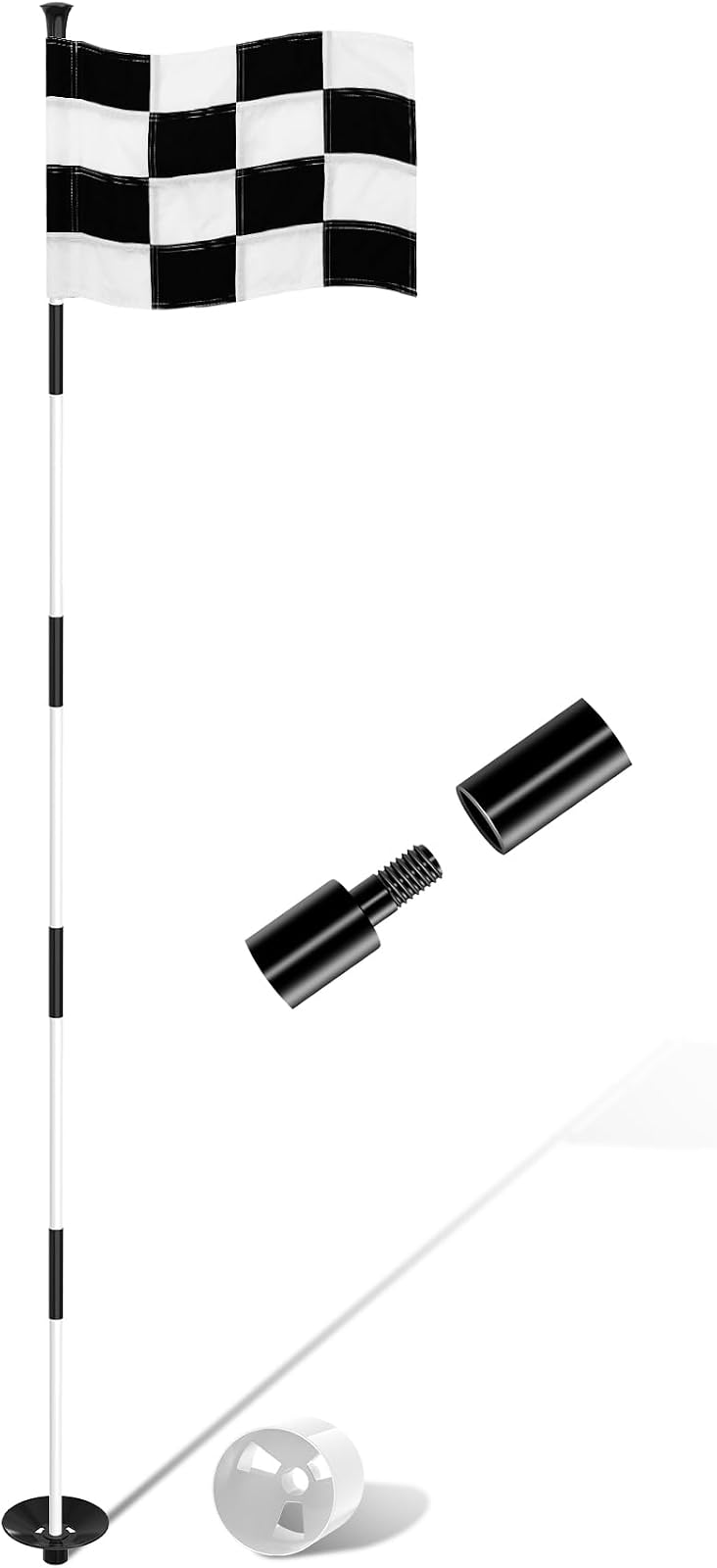
A full height course pin looks right on an open fairway, but in a small yard it catches on low branches and looms over short putts. We build our poles in sections so you can drop sections out, change how tall the pin stands, and suit the backdrop behind your hole without buying another stick.
Sightlines and what sits behind the cup
A pole exists so you can see the target from where you stand to putt. Out on a fairway, that means standing tall above mounds and long grass. In a yard, your longest putt is often across a flat stretch of turf toward a cedar hedge, a chain link fence, or the side of a garage. If the top of the hedge sits lower than a full pin, a tall pole sticks up into the sky and catches the wind. If the fence is high, a short pin disappears against the pickets. Check what sits directly behind the cup along your main putting line before you assemble the sections.
Dropping sections to adjust height
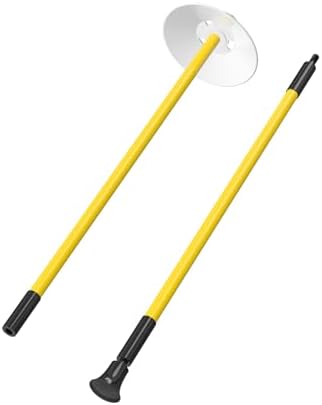
Because our poles break down into individual lengths, you do not have to settle on one fixed height when you set the pin in the grass. Pack three sections together for a compact yard green, or link four or five when you want to see the flag from around the corner of the house. This also makes storage straightforward, since the whole stick comes apart to ride flat in a car trunk or sit on a garage shelf for the winter. You get multiple heights out of one box by leaving pieces out.
Three ways the joints connect
The sections on our poles meet in one of three ways, and they do not interchange. Some poles use threaded ends that screw into threaded aluminum joints for a rigid, continuous feel. Others push straight together with slip fit sockets that slide apart when you pull them. A third style locks each piece in place with spring buttons that snap into drilled holes. If you already have a pole on your lawn and want to add another, look at how the segments meet so your parts match up if you ever swap them around.
What the disc base does in the cup
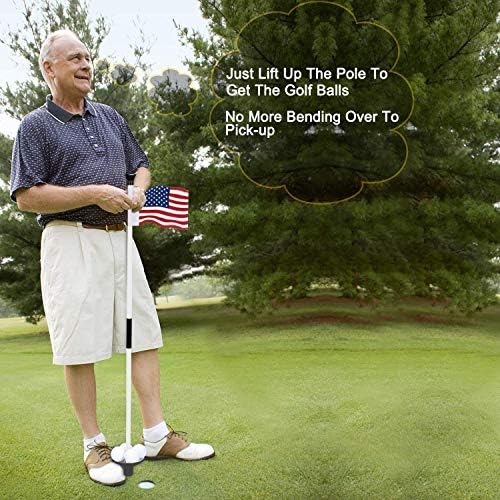
Bending over to dig a golf ball out of the bottom of a hole gets old when you are putting back and forth all afternoon. Most of our poles sit on a round disc base that rests inside the bottom of the cup. When you sink a putt, the ball settles on top of that disc. Lift the flagstick by its center, and the disc brings the ball right up to the lip of the turf. It saves your fingers from scraping the inside wall of the liner and helps keep the rim of the hole from breaking down under frequent reaching.
Steel bands versus solid fiberglass
We make poles from fiberglass rods and from steel tubing painted in alternating red and white bands. Solid fiberglass has plenty of flex, so if a dog bumps it or the wind leans hard on the flag, the rod bends and springs back. Banded steel stays rigid and gives a classic stripe that stands out clearly against dark shrubbery, but it resists bending when brushed by a mower wheel. Both materials sit in the same regulation ground cups, so pick the build that suits what moves through your yard.
Worth remembering
- Sections join by threaded aluminum joints, slip fit sockets, or spring buttons
- Leaving sections out lets a single pole stand at shorter heights
- The disc base lifts the ball out of the cup when the pole is pulled
- Fiberglass poles flex on contact while banded steel poles remain rigid
- A sleeve flag rotates on the pole while a grommet flag attaches to clips
Setting the pin in place
Assemble the sections you need, drop the base into your cup, and slide your flag over the top. If the flag feels too high against the fence line or gets whipped around by the wind, take one middle segment out and set the pin back in the turf.